

In plastic selection, you might notice an interesting phenomenon: for the same brand, natural (NC) or transparent samples often have slightly better physical properties (especially impact strength and elongation) than black (BK) or dark-colored samples.
Does color really change the "quality" of a material? The answer is yes.
This involves multiple scientific reasons, including carbon black additives, compatibility, and processing thermal history.

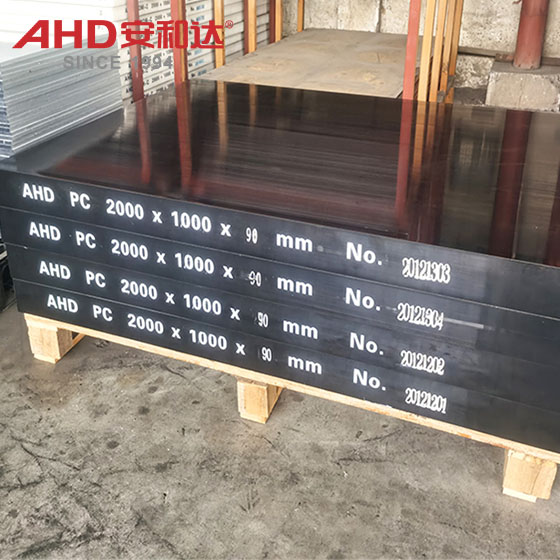
The reason plastics appear black is almost entirely due to the addition of carbon black.
Microscopic perspective: Carbon black is an extremely fine powder. In the plastic matrix, these tiny carbon black particles are essentially "inorganic fillers" or you could consider them "impurities."
Stress concentration: When plastic is subjected to tension or impact, ideally, the molecular chains smoothly transmit the force. However, the presence of carbon black particles disrupts this continuity. Stress concentration points form at the edges of each tiny carbon black particle. It's like poking many invisible holes in a smooth sheet of paper; tearing it is naturally easier than tearing a whole sheet of paper.
Compatibility and Interface Defects
Plastic molecular chains and carbon black particles are two completely different substances.
Interfacial Bonding: If the bonding strength between carbon black and the plastic matrix is insufficient, tiny gaps (interfacial defects) will form between them.
Crack Initiation Points: Upon impact, cracks most easily initiate and rapidly propagate from these interfacial gaps. Therefore, the notched impact strength of black materials is often about 5%-15% lower than that of undyed materials.
Thermal History and Degradation Risks
To ensure uniform carbon black distribution, black plastics typically require additional steps during manufacturing.
Masterbatch Involvement: Manufacturers usually create a "black masterbatch" first, then mix it with natural-colored particles. This means that a portion of the black material undergoes secondary processing.
Heat Damage: Plastics are highly sensitive to high temperatures. Each additional high-temperature melting process causes some degree of shearing and degradation of the molecular chains. Shorter molecular chains naturally reduce the material's toughness and tensile properties.
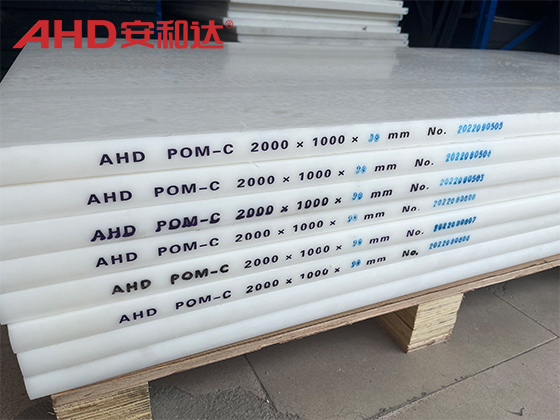
Not All Black is "Weak"
While black is often considered slightly inferior in performance, in some aspects, it is actually "enhanced":
1. UV Resistance: Carbon black is an excellent UV absorber. Natural-colored plastics quickly become brittle under sunlight (photoaging), while black plastics benefit from the carbon black's protection of their internal structure, resulting in a longer outdoor lifespan.
2. Antistatic Properties: High carbon black content can impart a certain degree of electrical conductivity or antistatic properties to the material.

AHD ESD POM Sheet
The "Hidden Rules of Color" in Selection
In precision design or high-performance scenarios, ignoring the "performance deviations caused by color" can lead to serious quality issues. Never directly apply the material property data sheets of the natural color to design black parts.
Performance Allowance: If your product must be black and is located in a critical load-bearing area, it is recommended to leave a small safety margin in the strength design.
Based on Actual Measurements: Try to find material property data specific to the color, rather than generic grade data.