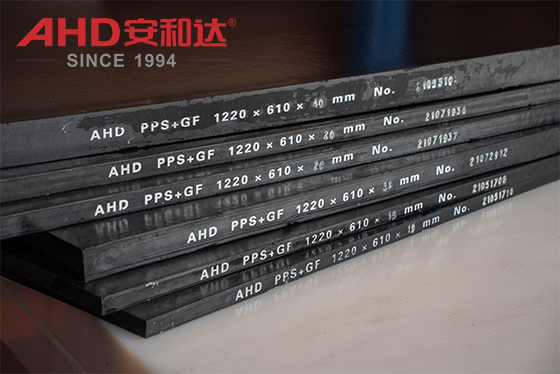
When you pick up your phone, disassemble a car part, or examine the casing of a home appliance, you might not realize that these seemingly ordinary plastic products contain a group of "invisible steel bars"—glass fiber (GF). From 30%GF PC Sheet to 30%GF PA6 Sheet, these reinforcing glass fibers silently support the body of organic plastic sheets and rods, just like the steel bars in concrete. Today, let's take a look at how long glass fibers, short glass fibers, and flat glass fibers enable plastic materials to achieve a transformation that combines rigidity and flexibility.
Shape and structural differences
| Length range | Diameter/thickness | Shape characteristics | Manufacturing process characteristics | |
| Long glass fiber | 5~25mm (commonly 6~12mm) | 10~20um | Continuous or long-segment cuts ensure high fiber integrity. | Many processes employ "direct long-fiber reinforcement," preserving the original fiber length. |
| Short glass fiber | 0.1~1mm (commonly 0.2~0.5mm) | 10~15um | Short cut segments, prone to breakage during processing | Sheared and broken during melt blending, resulting in high length dispersion |
| Flat glass fiber | Typically 0.5~5mm | Thickness 3~10um, width 50~200um | Flat strip shape, high aspect ratio (length/thickness) | Made with a special wire drawing process to create a flat cross-section, retaining a certain length |
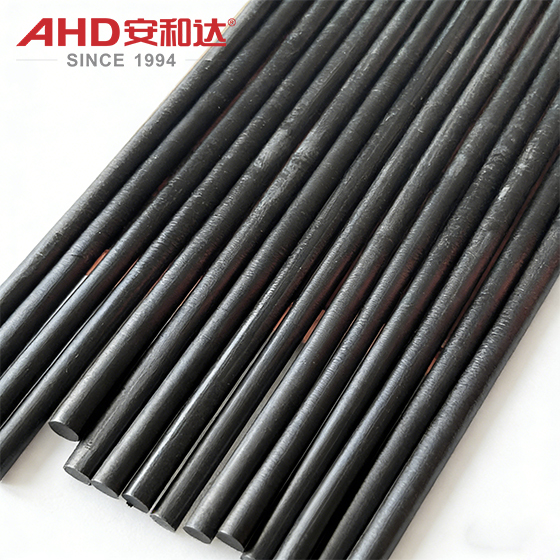
Performance Differences Comparison
1. Mechanical Properties
Long Glass Fiber:
Due to its longer fiber length and larger interfacial area with the resin, it can more effectively transfer stress. Tensile strength and flexural strength are 20%~50% higher than short glass fiber, and impact strength (especially notched impact) can be increased by 50%~100%, even approaching the impact resistance level of metals.
Fatigue Resistance: Under long-term stress, the fibers are less likely to detach from the matrix, resulting in superior resistance to repeated bending and vibration.
Short Glass Fiber:
Strength and Rigidity: Strength and rigidity are higher than pure resin, but lower than long glass fiber (tensile strength is 15%~30% lower than long glass fiber at the same content), and the difference in impact strength is more significant (0.30%~60%).
Isotropy: The shorter and more uniformly dispersed fibers result in better isotropy of the mechanical properties of the finished product.
Flat Fiberglass:
Rigidity and Surface Properties: The flat structure exhibits superior rigidity perpendicular to the plane (e.g., anti-warping) and a larger contact area with the resin (3-5 times larger than round fiberglass of the same weight). Its surface smoothness is superior to ordinary fiberglass (reducing the "exposed fiberglass" defect).
Impact and crack resistance: It has good transverse toughness, which is suitable for the impact resistance requirements of thin-walled products, but its longitudinal strength is slightly lower than that of long glass fibers of the same length.
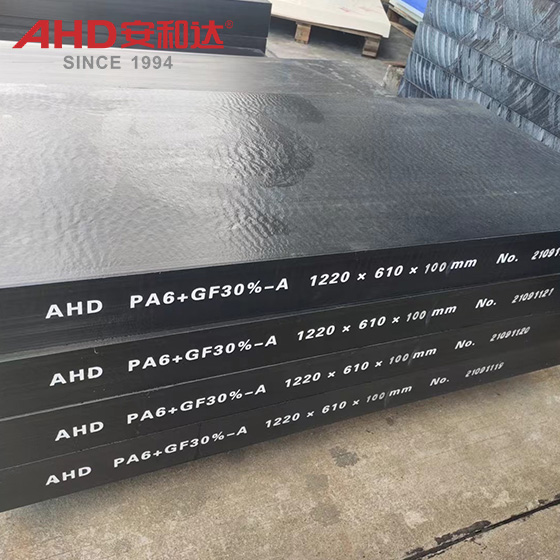
2. Dimensional Accuracy
Long Glass Fibers: Due to their length and the "skeleton" effect they form, they offer stronger control over resin shrinkage, resulting in lower shrinkage (especially in the flow direction). However, they exhibit greater anisotropy (significant difference in shrinkage between the flow direction and the perpendicular direction, making them prone to warping).
Short Glass Fibers: Shrinkage is higher than long glass fibers but lower than pure resin, and their anisotropy is weaker (uniform fiber dispersion leads to more even shrinkage).
Flat Glass Fibers: Shrinkage is between that of long and short glass fibers. Their flat structure provides more uniform control over in-plane shrinkage, resulting in optimal anti-warping performance (suitable for large-area flat products).
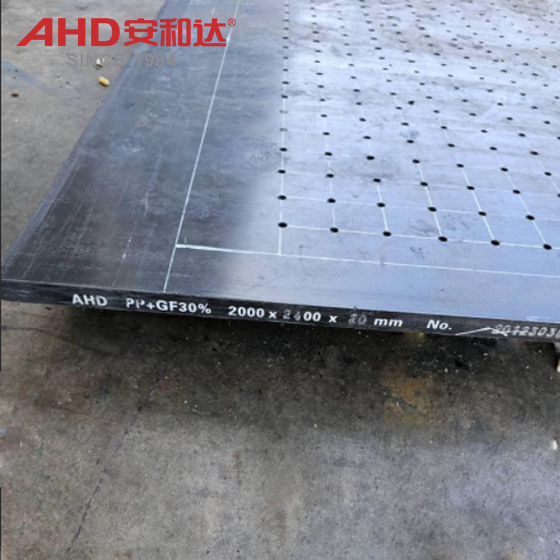
3. Processing Flowability
Long Glass Fiber: Poor flowability (long fibers are prone to tangling, increasing melt viscosity). Requires high precision in equipment screw and mold gate dimensions (large gate, low shear process). Injection molding machine gate size > 3mm. Also prone to underfilling. Use with caution for particularly complex structural parts. Requires a dedicated long-fiber injection molding machine.
Short Glass Fiber: Good flowability (short fibers offer less melt resistance), suitable for injection molding of complex structures and thin-walled products.
Flat Glass Fiber: Better flowability than long glass fiber (flat structure reduces melt flow resistance), but slightly lower than short glass fiber. Less prone to gate clogging during processing (easier to pass through narrow slots than round glass fiber).
AHD Glassfiber PPS Sheet