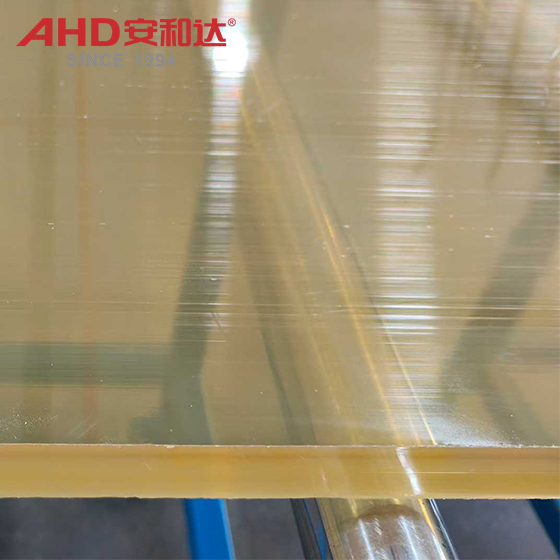
What is PES?
PES (polyethersulfone) is an amorphous thermoplastic resin with an alternating structure of aromatic rings, ether bonds, and sulfone groups in its main chain. First developed by ICI in the UK in 1972, it is a high-performance specialty engineering plastic. It has a transparent, amber appearance, is non-toxic, and has passed FDA food-contact certification. It combines thermal stability, mechanical strength, and processability, making it the best among the three polysulfone families (PSU, PES, PPSU) in terms of heat resistance and processability.

PES
Core Characteristics and Advantages of PES
1. Thermal Properties
Glass transition temperature (Tg): 225℃, Heat distortion temperature (HDT): 203~204℃, Long-term continuous service temperature: 180℃ (up to 200℃ for glass fiber reinforced grade), short-term withstand temperature up to 220℃.
Excellent resistance to heat aging and creep; can be used continuously at 180℃; extremely high dimensional stability; low coefficient of linear expansion; not easily deformed or warped at high temperatures.
Resistant to hot water hydrolysis: Can withstand 150~160℃ high-pressure steam; stable performance after repeated steam sterilization (134~145℃); medical grade can withstand thousands of sterilization cycles.
2. Mechanical and Structural Properties
High strength, high modulus: Tensile strength approximately 84.3MPa, flexural modulus 2.65GPa; excellent balance between rigidity and toughness; maintains high mechanical properties even at high temperatures.
Amorphous and transparent, with light transmittance close to that of PC, and does not yellow or fog at high temperatures, making it suitable for transparent structural parts and window components.
Low molding shrinkage (approximately 0.6%), high dimensional accuracy, suitable for precision injection molding and thin-walled parts.
3. Chemical and Environmental Resistance
Chemical Resistance: Excellent resistance to acids, alkalis, salts, oils (gasoline, engine oil), cleaning agents, and disinfectants, superior to PSU Sheet, slightly inferior to PPSU Sheet; not resistant to strong polar solvents (ketones, esters, halogenated hydrocarbons, DMSO).
Self-flame retardant: Achieves UL94 V-0 rating without the addition of flame retardants, produces low smoke and low toxicity during combustion, meeting the flame retardant requirements for electronics and aerospace.
Electrical Insulation: Stable dielectric properties at 200℃, high volume resistivity, H-class (180℃) insulating material, suitable for high-temperature electronic components.
Radiation Resistance: Stable to gamma rays and X-rays, suitable for medical imaging and nuclear industry components.
4. Processing and Safety Advantages
Processability: Melt viscosity is lower than PPSU, allowing for injection molding, extrusion, blow molding, and compression molding. It is suitable for complex and precision structures, offering a more user-friendly processing window than PPSU.
Hygiene and Safety: BPA-free, meeting FDA and EU food contact standards, suitable for food utensils, baby products, and medical consumables.
Excellent Film-Forming Properties: A core substrate for water treatment membranes (ultrafiltration, nanofiltration, microfiltration), offering outstanding membrane flux and fouling resistance.
5. Core Weaknesses
Poor Weather Resistance: Not resistant to UV radiation; outdoor use requires UV-resistant modification or coating protection.
High Water Absorption (saturated water absorption rate approximately 2.1%); thorough drying is required before molding, otherwise dimensional and strength issues will be affected.
Cost is higher than general-purpose engineering plastics (PC, ABS) but lower than PEI and PEEK, classifying it as a mid-to-high-end specialty plastic.
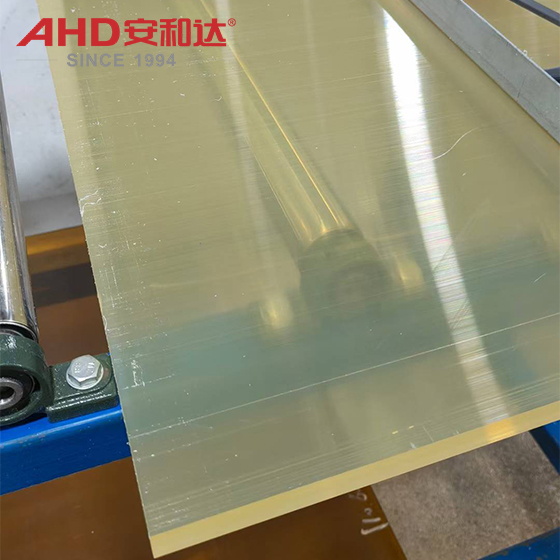
PES vs PSU vs PPSU (Comparison of the three polysulfone products)
| Performance | PSU (Polysulfone, Bisphenol A type) | PES (Polyethersulfone) | PPSU (Polyphenylsulfone, Polyphenylenesulfone) |
| Molecular Structure | Bisphenol A + Dichlorodiphenyl sulfone | Bisphenol S + Dichlorodiphenyl sulfone | Bisphenol A + Dichlorodiphenyl sulfone |
| Tg/HDT | Tg≈185℃, HDT≈174℃ | Tg≈225℃, HDT≈204℃ | Tg≈220℃, HDT≈207℃ |
| Long-term operating temperature: | 160~170℃ | 180℃ (200℃ for glass fiber reinforced) | 180~190℃ |
| Toughness / Impact Resistance | Medium, Notch Sensitive | Good, Stiffness Preferred | Extremely High (Strontium in Polysulfone), Impact and Crack Resistance |
| Chemical resistance / Hydrolysis resistance | Good, steam resistance moderate | Excellent, better than PSU | Best, resistant to strong corrosion and repeated steam sterilization |
| Processability | Good, easy to mold | Good, moderate melt viscosity | Poor, high melt viscosity, difficult to process |
| Core Positioning | General-purpose polysulfone, cost-effective choice | Comprehensive balance, excellent heat resistance and processability | Top-performance type, exceptional toughness and chemical resistance |
Key Findings
PSU: Entry-level polysulfone, lowest cost, suitable for medium-temperature, general hydrolysis-resistant applications (such as ordinary water treatment membranes, household appliance structural components).
PES: All-rounder, superior heat resistance to PSU and processing superior to PPSU, the mainstream choice for medical, electronics, food, and water treatment, balancing performance and cost.
PPSU: Top-performance, with the strongest toughness, chemical resistance, and steam sterilization resistance, suitable for extremely demanding conditions (such as high-end medical sterilization boxes, baby bottles, aerospace impact-resistant components), but with the highest cost and processing barriers.
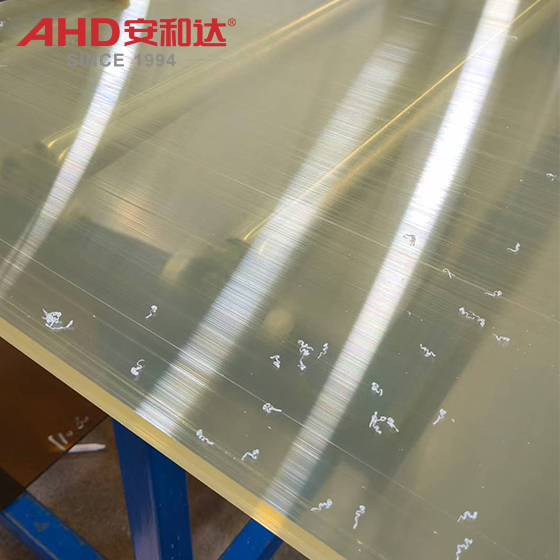
Typical Applications of PES
1. Medical and Hygiene: Surgical instrument handles, endoscope accessories, dental tools, dialyzers, infusion connectors; resistant to repeated steam sterilization and gamma ray disinfection.
Medical filter membranes, separation membranes, petri dishes, sterile packaging components; biocompatible, non-leaching, and washable.
2. Electronics and Electrical: H-class insulated components, coil frames, connectors, relay bases, SMT solderable components, printed circuit board substrates; high temperature resistance, high insulation, self-flame retardant, and dimensionally stable.
High-temperature sensor housings, motor insulators, photovoltaic junction box components; suitable for 200°C operating conditions.
3. Water Treatment and Separation: Ultrafiltration/nanofiltration/microfiltration membranes, hollow fiber membranes, filter cartridges; acid and alkali resistant, fouling resistant, high flux; used for pure water preparation, industrial wastewater treatment, biopharmaceutical separation, and seawater desalination pretreatment.
4. Food Contact and Home Appliances
Coffee machine/kettle liners, baby tableware, microwave cookware, baking molds; FDA certified, withstands hot water above 150°C, odorless, easy to clean.
Steam iron parts, dishwasher heat-resistant structural components; withstands repeated damp heat cycles.
5. Automotive and Machinery
Engine peripheral sensors, valves, water pump impellers, air conditioning heat-resistant components; oil-resistant, temperature-resistant, creep-resistant, achieving lightweight by replacing metal.
Precision gears, bearing cages, high-temperature shafts for copiers/printers; dimensionally stable, wear-resistant, self-lubricating.
6. Aerospace and High-End Industry
Aircraft cabin interior parts, instrument housings, composite material toughening agents, heat-resistant coatings; flame-retardant, low-smoke, lightweight, radiation-resistant.
Chemical anti-corrosion linings, high-temperature pipe fittings; resistant to strong corrosive media and high-temperature conditions.
PES boasts core competitive advantages such as long-term heat resistance up to 180℃, resistance to steam hydrolysis, self-flame retardancy, high transparency, BPA-free properties, and easy processing. Its performance falls between PSU and PPSU, making it a top choice for demanding mid-to-high-end applications. It is widely used in medical, water treatment, electronics, and food contact applications. While its civilian applications are niche, the demand is clear, making it an ideal alternative to metals and low-end plastics.
Polyphenylsulfone PPSU Sheet