

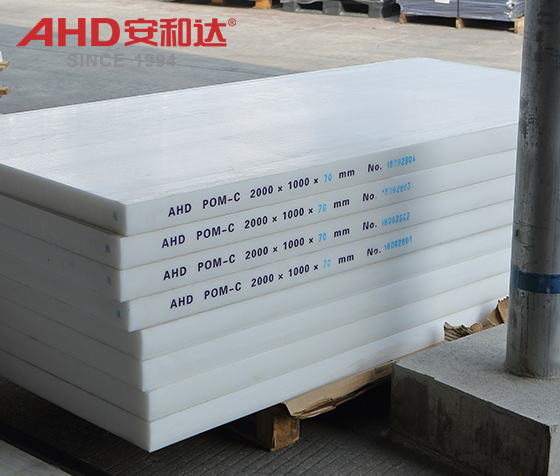
POM (Polyoxymethylene) board is an ideal material for manufacturing precision components and wear-resistant parts, and its machining quality directly affects product performance. Based on mature processes, we've outlined five key machining methods to help you achieve better results.

1. Precision Machining of Antistatic Boards
For parts with high surface finish requirements, we recommend using a wide-head cutter to ensure a smooth cut. When cutting, using a diamond-shaped long-bladed cutter can effectively reduce burrs. For machining thin and soft materials, we recommend insert-like cutter heads for precise cutting and improved yield.
2. Plane and Contour Milling
When milling planes, end milling is more economical. For circumferential or profile milling, we recommend using milling cutters with no more than two teeth, which reduces vibration and ensures stable machining. Single-cut milling often yields better surface finish and dimensional accuracy.
3. Safe Drilling and Stress Control
We recommend using twist drills with smooth helical flutes (helix angle 12-16 degrees) to facilitate chip removal. Drilling large holes requires a step-by-step approach or the use of a hollow drill. When machining solid materials, always keep the drill bit sharp to avoid pressure-induced cracking. For reinforced materials, preheating (e.g., to 120°C) can significantly reduce internal stress; this also applies to nylon and polyester.
4. Efficient Sawing and Thermal Management
When sawing, select a saw blade with large, sharp teeth and use a thin blade for thick materials to control frictional heat and prevent material deformation. Proper parameter selection ensures a smooth cut, laying a good foundation for subsequent processes.
5. High-Quality Thread Tapping
For thread cutting, a thread cutter is recommended; a double-toothed cutter helps avoid burrs. Dies that easily cause secondary cutting are generally avoided. Allow appropriate machining allowance (e.g., approximately 0.1mm) to ensure precise and reliable thread fit.
Mastering these methods can significantly improve the reliability and consistency of POM board parts. We focus on providing practical material solutions for our clients. If you encounter challenges in your specific applications, please feel free to contact us; we will use our professional experience to help you advance your project.
