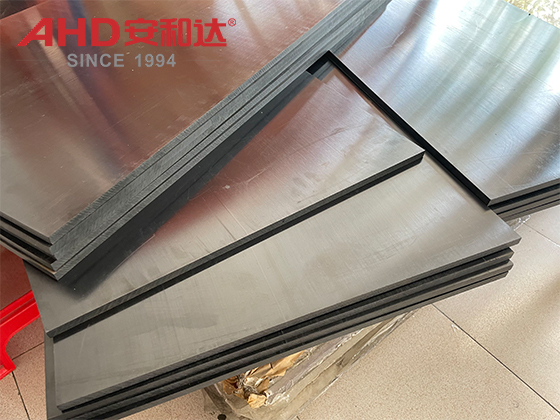
Professional Analysis: Superior Performance and Application Selection of Glass Fiber Reinforced Engineering Plastics
In numerous industrial and manufacturing sectors, the strength, stability, and durability of materials directly determine the upper limit of product performance. Glass fiber, as a highly efficient reinforcing material, is widely used in various engineering plastics, significantly improving their mechanical properties. Our company, with deep expertise in polymer composite materials, will now provide a professional analysis of common glass fiber reinforced materials to help you select materials more accurately.
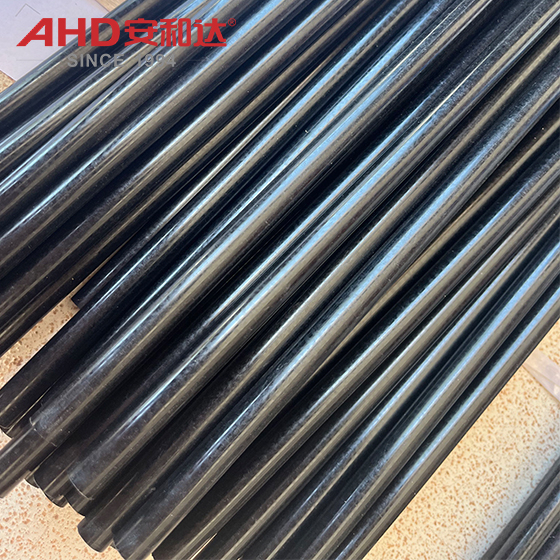
The Core Role of Glass Fiber: Strengthening and Stabilization
The addition of glass fiber can significantly improve the tensile strength, creep resistance, and compressive strength of the matrix material, while enhancing rigidity and significantly improving the dimensional stability of the material at high temperatures, reducing the rate of thermal expansion and contraction. However, it should be noted that it usually leads to a certain degree of decrease in material toughness, elongation at break, and impact strength. Furthermore, because glass fiber may cause wear on mating surfaces, careful evaluation is required in applications involving continuous sliding friction or high-precision fits.
Detailed Explanation of the Properties of Plastic Sheets with Added GF:
1. PTFE+GF Sheet (Polytetrafluoroethylene + Fiberglass)
Adding glass fiber to PTFE, the "king of plastics," significantly improves its compressive strength, dimensional stability, and abrasion resistance, while maintaining excellent chemical corrosion resistance and a low coefficient of friction. It is particularly suitable for manufacturing corrosion-resistant and wear-resistant seals, bearings, and guide rail gaskets.
2. PA6+GF Sheet (Nylon 6 + Fiberglass)
Fiberglass greatly enhances the strength, stiffness, and heat distortion temperature of PA6, making it a superior lightweight alternative to metals. It is widely used in structural components requiring high mechanical strength and certain heat resistance, such as gears, fan blades, and power tool housings.
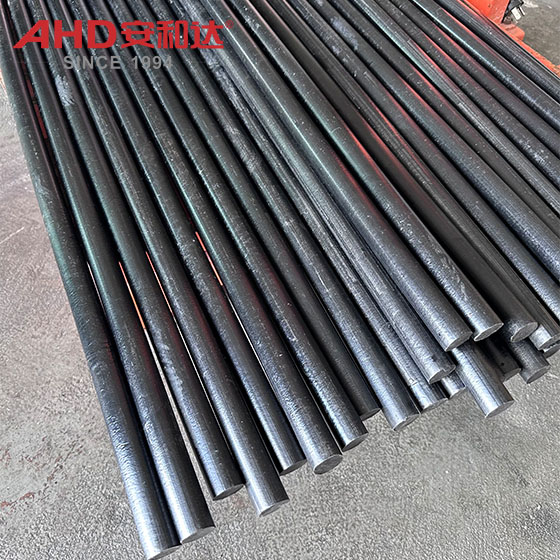
PA6 GF Rod
3. PP+GF Sheet (Polypropylene + Fiberglass)
Modified PP materials exhibit a significant leap in rigidity, dimensional stability, and heat resistance. Compared to pure PP, its creep resistance is particularly outstanding, making it commonly used in automotive interior parts, heat-resistant containers, washing machine components, and other applications where a balance between cost and performance is required.
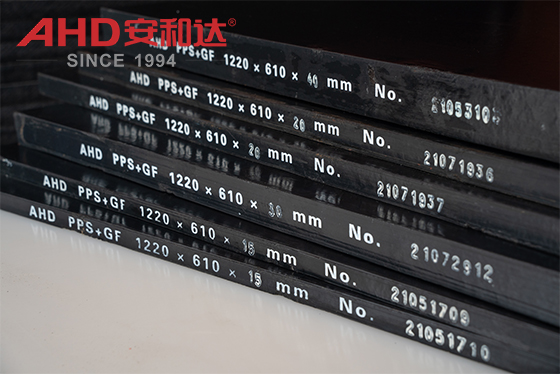
4. PPS+GF Sheet (Polyphenylene Sulfide + Fiberglass)
This is a naturally high-performance combination. PPS itself has excellent heat resistance and flame retardancy. The addition of fiberglass further enhances its mechanical strength, dimensional accuracy, and arc resistance, making it an ideal material for electronics, automotive engine components, and high-temperature environments.
5. POM+GF Sheet (Polyoxymethylene + Fiberglass)
The reinforcement of fiberglass further improves the rigidity, creep resistance, and fatigue strength of POM (polyoxymethylene), while maintaining excellent self-lubricating and wear resistance. It is commonly used in the manufacture of precision gears, bearings, and fasteners requiring high rigidity and low wear.
6. PC+GF Sheet (Polycarbonate + Fiberglass)
Fiberglass effectively improves the strength, rigidity, fatigue resistance, and dimensional stability of PC, while reducing its inherent stress cracking tendency. Suitable for electrical enclosures, safety components, and automotive parts requiring high strength, transparency (optional), and dimensional accuracy.
7. PEI+GF Sheet (Polyetherimide + Glass Fiber, such as PEI 2300)
This is a top-tier high-temperature engineering plastic. 30% glass fiber reinforced PEI 2300 achieves extremely high levels of strength, rigidity, and dimensional stability. It possesses inherent flame retardancy (UL94 V-0 rating) and extremely low smoke density, with a glass transition temperature as high as 215°C, allowing for long-term stable operation in environments of 160-180°C. Simultaneously, it exhibits excellent electrical insulation properties, chemical resistance, and outstanding hydrolytic stability (retaining over 85% strength after immersion in boiling water for 10,000 hours). It is widely used in aerospace high-temperature components, automotive engine compartment parts, high-frequency electronic connectors, and medical devices requiring repeated steam sterilization.

8. PEEK+GF Sheet (Polyetheretherketone + Glass Fiber)
As a top-tier specialty engineering plastic, glass fiber reinforced PEEK pushes the material's overall performance to its peak: extremely high strength, excellent high-temperature resistance, and superior hydrolytic stability and chemical resistance. It is the preferred material for harsh operating conditions in aerospace, high-end medical implants, petrochemical, and semiconductor industries.
Professional Material Selection Advice: Choosing the right glass fiber reinforcement material requires a comprehensive evaluation of the application's requirements for strength, stiffness, temperature resistance, abrasion resistance, chemical resistance, dimensional accuracy, and cost. Our company has a rich material application database and a technical support team, providing you with a one-stop solution from material recommendations and performance analysis to molding processes.
If you face material selection challenges in project development or product upgrades, please feel free to contact us. Our engineering team will provide you with professional, customized material consultation and technical support.