PEI (polyetherimide) amber transparent sheets and PEEK (polyetheretherketone) sheets are both high-performance engineering plastics, but they differ significantly in chemical structure, core properties, processing performance, and application scenarios. The following is a multi-dimensional comparative analysis of their differences and advantages:
Ⅰ. Definitions and Chemical Structures
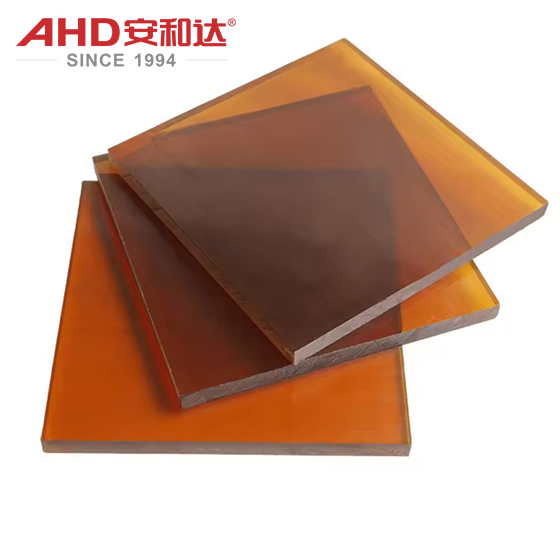
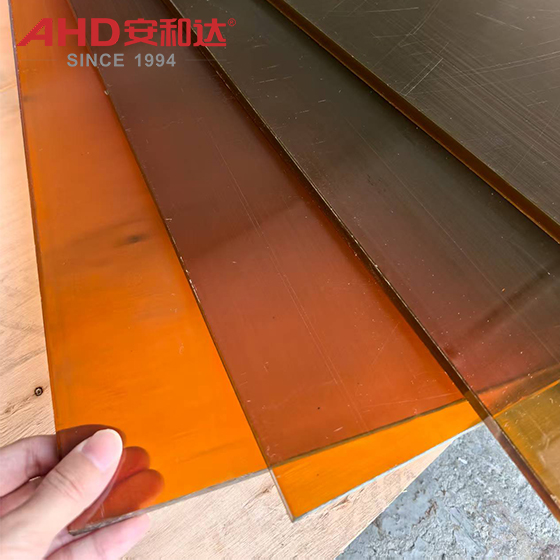
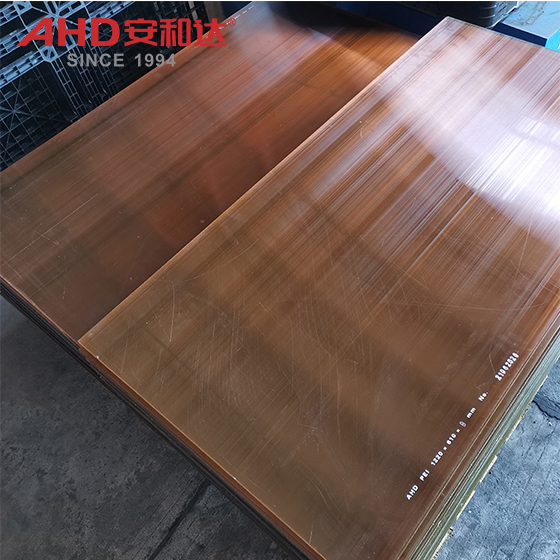
Polyetherimide Sheet: PEI is an amorphous thermoplastic, made primarily from polyetherimide resin through high-temperature extrusion molding. Its molecular chains are randomly arranged, giving it an amber-colored transparent/semi-transparent appearance (similar to the texture of amber). It is one of the few engineering plastics that combines transparency and high performance.
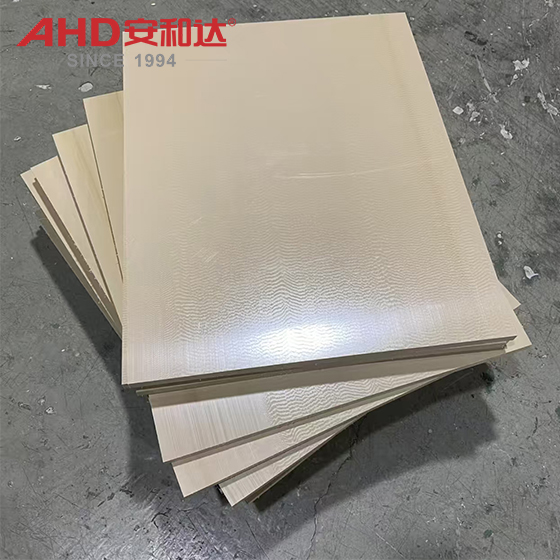
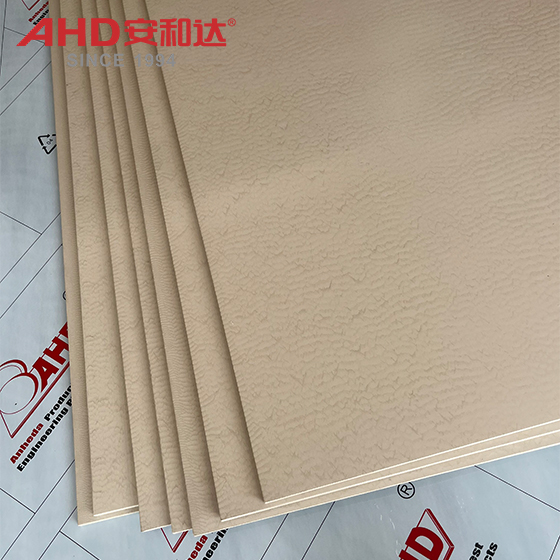
Polyetheretherketone Sheet: PEEK is a semi-crystalline aromatic thermoplastic. Its main chain contains ketone bonds (-CO-) and ether bonds (-O-), with the molecular chains partially arranged in an ordered manner (the crystalline region accounts for approximately 30%-50%). It is opaque in appearance, with some grades (such as PEEK-1000) being light beige.
Ⅱ. Comparison of Core Characteristics and Advantages
The difference in characteristics between PEI and PEEK stems from their amorphous vs. semi-crystalline molecular structures, as detailed below:
| PEI Sheet | PEEK Sheet | |
| High Temperature Resistance | Long-term service temperature: 170-180℃, short-term tolerance: 210℃; Glass transition temperature (Tg): 217℃, Heat distortion temperature (HDT): 200-210℃ (1.8MPa). | Long-term service temperature: 250℃, short-term tolerance: 300℃; Melting point (Tm): 334℃, Load-load heat distortion temperature (HDT): 316℃ (30% GF reinforced). |
| Mechanical Properties | Tensile strength: 105-115MPa, flexural strength: 150-180MPa; Elongation at break: 50-80% (high ductility); Hardness: Rockwell M109. | Tensile strength: 90-100MPa, flexural strength: 150-170MPa; Elongation at break: 15-40% (slightly lower toughness); Hardness: Rockwell M99. |
| Chemical Resistance | Resistant to alcohol, acetone, dilute acids and weak alkalis; but not resistant to strong alkalis (such as NaOH) and concentrated sulfuric acid. | Resistant to strong acids (except concentrated sulfuric acid), strong alkalis, and organic solvents (such as petroleum and chemical media); excellent hydrolysis resistance (can operate for extended periods in high-temperature, high-pressure water). |
| Flame Retardancy | Inherently flame retardant (UL94 V-0 rating), oxygen index 46%, no dripping during combustion. | Inherently flame retardant (UL94 V-0 rating), oxygen index 47%, extremely low smoke and toxic gas release during combustion. |
| Processing Performance | High melt index and good flowability, suitable for injection molding/extrusion of complex shapes (such as electronic connectors and automotive sensors); wide processing window, no special equipment required. | High melting point (334℃), requiring high-precision injection molding/extrusion equipment (e.g., Tesla robot gears require ±5μm accuracy); more difficult to process, resulting in higher costs. |
| Cost | Lower, approximately half the cost of PEEK. | Higher, with slightly lower costs for Chinese-made products. |
Ⅲ. Key Differences Summary
High Temperature Resistance: PEEK's long-term operating temperature (250℃) is significantly higher than PEI's (170℃), making it more suitable for extreme high-temperature environments.
Crystallization and Dimensional Stability: PEEK's semi-crystalline structure gives it superior dimensional stability, while PEI's amorphous structure results in slightly poorer wet-state dimensional stability.
Chemical Corrosion Resistance: PEEK exhibits stronger resistance to strong alkalis and organic solvents, making it suitable for corrosive environments such as chemical and petroleum industries; PEI is more suitable for applications with lower requirements for chemical corrosion, such as electronics and automotive.
Processing Difficulty and Cost: PEI has a lower processing threshold (no special equipment required) and costs only half that of PEEK, making it suitable for large-scale, low-cost applications (such as electronic connectors and automotive sensors);
PEEK requires high-precision equipment, resulting in higher costs, and is suitable for high-value-added, extreme environments (such as medical implants and aerospace structural components).

Ⅳ. Application Scenarios Comparison
PEI Amber Transparent Sheet
Primarily used in electronics, automotive, and medical fields where transparency, processability, and cost are critical:
Electronics: High-temperature connectors, IC bases, 5G base station antenna covers (transparency facilitates signal transmission);
Automotive: Sensor housings (high temperature resistance + dimensional stability);
Medical: Surgical instrument handles (electrical insulation + hydrolysis resistance);
3D Printing: Heated bed substrates (transparency facilitates observation of the printing process).
PEEK Sheet
Primarily used in aerospace, medical, and chemical fields where high temperature resistance, chemical corrosion resistance, and mechanical strength are required:
Aerospace: Satellite gas analyzer components, heat exchanger blades (long-term operation at 250℃);
Medical: Bone locators, artificial bones (biocompatibility + radiation resistance);
Chemical: Oil well equipment (oil resistance, high pressure resistance), chemical pipeline sealing rings (resistant to strong acids and alkalis);
Machinery: Robot joint gears (wear resistance + fatigue resistance), bearings (self-lubricating + low friction).
Ⅴ. Selection Recommendations
PEI Selection: If the requirement is cost-sensitive, involves processing complex shapes, and demands high transparency (e.g., electronic connectors, automotive sensors), and the operating temperature is ≤170℃, PEI is a better choice (lower cost, easier processing).
PEEK Selection: If the requirement is extreme high temperature (≥250℃), strong chemical corrosion (e.g., chemical, petroleum), and high mechanical strength (e.g., aerospace structural components), PEEK's high temperature resistance and chemical corrosion resistance better meet the requirements (although it is more expensive).
In summary, both PEI and PEEK are high-performance engineering plastics, but PEI emphasizes transparency, processability, and cost, while PEEK emphasizes high temperature resistance, chemical corrosion resistance, and mechanical strength. The choice should be made based on a comprehensive assessment of the specific application's temperature, chemical environment, processing requirements, and cost budget.