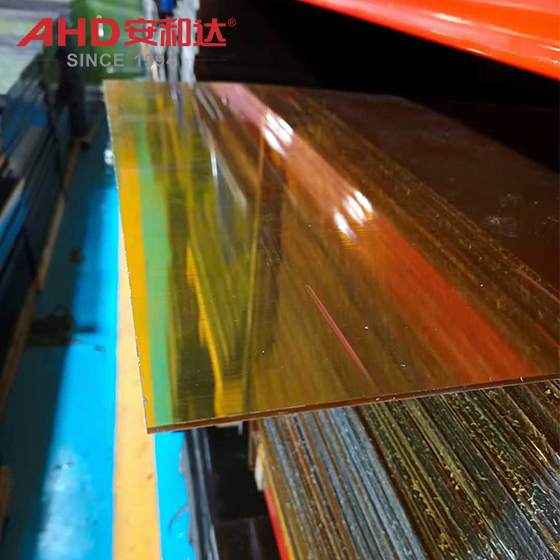
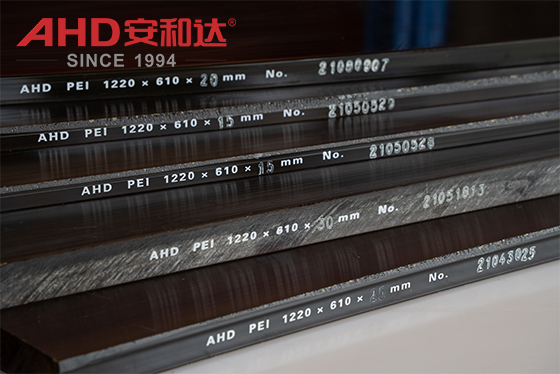
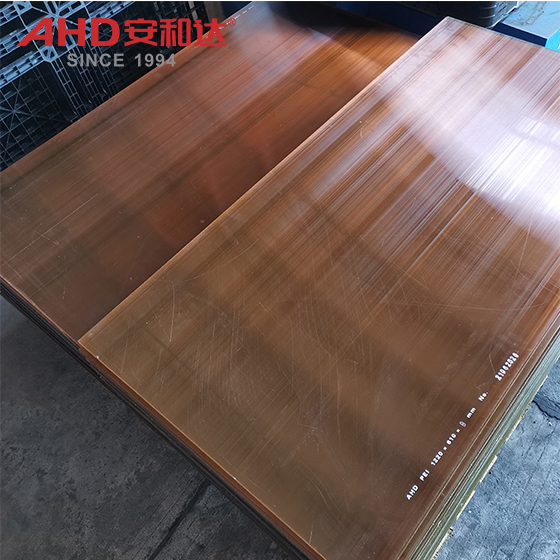
PEI amber transparent sheet (Polyetherimide Sheet) is a non-crystalline high-performance thermoplastic made from polyetherimide resin through high-temperature extrusion molding. It is amber-colored and transparent or translucent, belonging to the category of special engineering plastics.
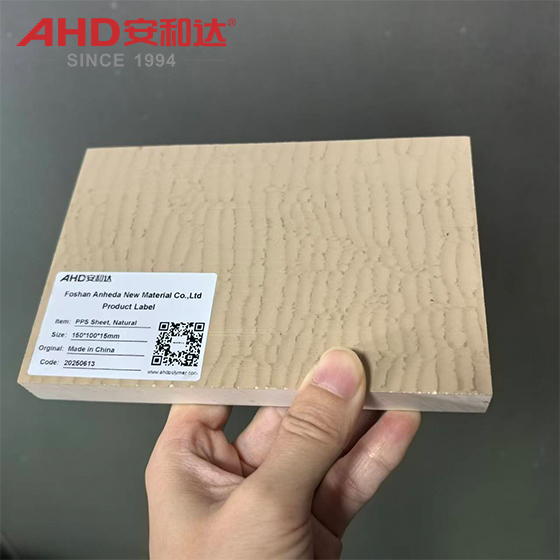
PPS Sheet (Polyphenylene Sulfide Sheet) is a highly crystalline (55%-65% crystallinity) thermoplastic engineering plastic. Its main chain consists of alternating benzene rings and sulfur atoms. It is typically white or light gray in appearance and also belongs to the category of high-performance engineering plastics.
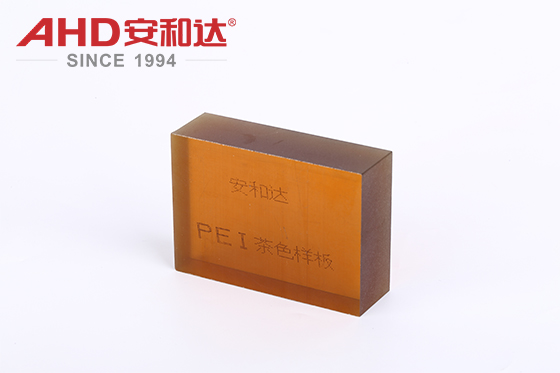
AHD PEI Plastic Sheet
Ⅰ. Characteristics and Advantages of PEI Amber Transparent Sheets
The core characteristics of PEI amber transparent sheets stem from their non-crystalline molecular structure, possessing features such as high-temperature resistance, balanced mechanical properties, and excellent electrical insulation. Specifically, these include:
1. High-Temperature Resistance: Long-term operating temperature up to 170℃ (dry environment), short-term tolerance to 210℃; glass transition temperature approximately 215℃, maintaining good strength and rigidity even at high temperatures.
2. Balanced Mechanical Properties: Possesses high tensile strength (approximately 100-150MPa), flexural strength (approximately 150-200MPa), and modulus, while also exhibiting certain toughness and creep resistance, capable of withstanding long-term mechanical stress.
3. Excellent Electrical Insulation: Maintains a stable dielectric constant (approximately 3.1-3.3) and low dielectric loss over a wide frequency range (1kHz-1GHz) and temperature range (-160℃ to 170℃), making it suitable as an insulating material for high-voltage, high-frequency environments.
4. Flame retardancy and weather resistance: Achieves UL94-V0 flame retardancy without the addition of flame retardants, with an oxygen index of approximately 47%; radiation resistant (strength retention rate >90% after gamma-ray radiation) and resistant to high and low temperature impacts.
5. Processing and dimensional stability: Good flowability, easy to injection mold, extrude, or machine; low coefficient of thermal expansion, superior dimensional stability compared to most crystalline plastics.
Advantages summary:
Balanced overall performance, especially outstanding in electrical insulation, high temperature resistance, and dimensional stability; its transparency (amber color) makes it suitable for parts with aesthetic requirements.
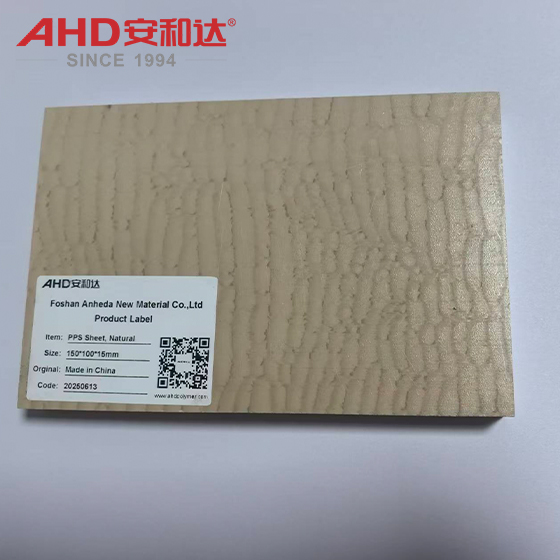
AHD PPS Plastic Sheet
Ⅱ. Characteristics and Advantages of PPS Sheets
The core characteristics of PPS sheets stem from their highly crystalline molecular structure, with high temperature resistance, chemical corrosion resistance, and high rigidity as their main highlights. Specifically, these include:
1. High Temperature Resistance: Long-term operating temperature can reach 200℃ (in air), and short-term resistance can withstand 230℃; heat distortion temperature (1.8MPa) is approximately 250℃, maintaining high rigidity even at high temperatures.
2. Chemical Corrosion Resistance: Exhibits extremely strong resistance to inorganic acids (such as sulfuric acid and hydrochloric acid), alkalis (such as sodium hydroxide), salt solutions, and most organic solvents (such as gasoline and toluene), making it one of the most chemically resistant plastics currently available.
3. Mechanical Properties: High rigidity and high hardness, but pure PPS has relatively low impact strength; it can be reinforced with glass fiber.
4. Flame Retardancy and Electrical Properties: Limiting oxygen index > 57%, achieving UL94-V0 flame retardancy; stable electrical properties, maintaining good insulation performance even in high temperature and high humidity environments.
5. Dimensional stability: Extremely low molding shrinkage and water absorption; minimal dimensional change under high temperature and high humidity conditions, suitable for precision manufacturing.
Advantages summary:
High temperature resistance, chemical corrosion resistance, and high rigidity are its core competitive advantages, making it particularly suitable for harsh chemical environments or high-temperature mechanical parts.
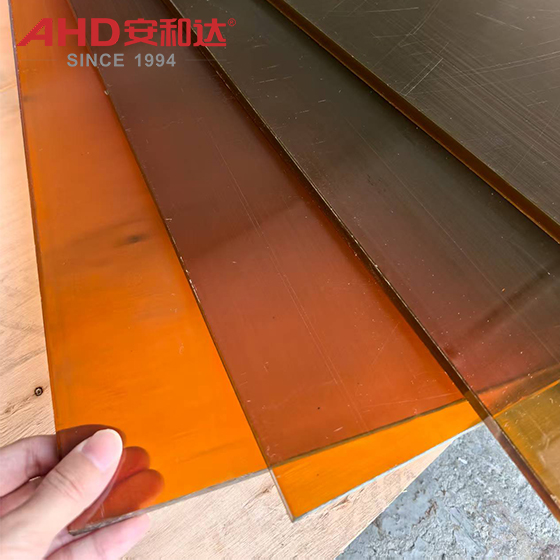
Ultem PEI Sheet
Ⅳ. The core differences between PEI amber transparent sheets and PPS sheets
| PEI Sheet | PPS Sheet | |
| Molecular Structure | Amorphous (non-crystalline) | Highly crystalline (55%-65% crystallinity) |
| Appearance | Amber, transparent/translucent | White/light gray (opaque) |
| High Temperature Resistance | Long-term use: 170℃, short-term: 210℃ | Long-term use: 200℃, short-term: 230℃ |
| Mechanical Properties | Balanced (strength, toughness, creep resistance) | High rigidity and hardness, but brittle in pure material. |
| Chemical Resistance | Resistant to most polar solvents (such as alcohols), but susceptible to strong acids and alkalis. | Resistant to almost all inorganic acids, alkalis, salts, and organic solvents. |
| Electrical Properties | Stable over a wide frequency and temperature range, suitable for high-frequency insulation. | Stable under high temperature and humidity, suitable for high-temperature electrical components. |
| Processing Difficulty | Good flowability, easy to injection mold/extrude. | High crystallinity, requires relatively high processing temperatures . |
Ⅴ. Typical Applications of PEI Amber Transparent Sheets and PPS Sheets
PEI's electrical insulation, high-temperature resistance, and dimensional stability make it suitable for high-end fields such as electronics, aerospace, and medical, specifically including:
Electronics: Integrated circuit (IC) packaging housings, printed circuit board (PCB) substrates, high-frequency connectors, relay housings, LED brackets, etc.
Aerospace: Aircraft interior parts, engine compartment heat insulation panels, satellite electronic equipment packaging, etc.
Medical: Surgical instrument handles, medical lamp reflectors, dental equipment components, drug delivery system housings (must comply with FDA standards).
Precision Machinery: High-precision molds, precision instrument guides, sensor housings, etc.
PPS's high temperature resistance, chemical corrosion resistance, and high rigidity make it suitable for harsh environments in chemical, automotive, electronics, and aerospace industries, specifically including:
Chemical: Chemical reactor linings, corrosion-resistant pipes, valves, pump bodies, and seals (e.g., chlorine pipelines, sulfuric acid storage tanks).
Automotive: Engine intake manifolds, fuel pump housings, sensor brackets, exhaust system components, and electrical connectors (e.g., ignition coils).
Electrical & Electronic: High-temperature electronic component packaging, printed circuit board (PCB) substrates, power module housings, and high-voltage switch components.
Aerospace: Aircraft engine nacelle heat insulation panels, wing structural components, spacecraft electronic equipment packaging, and satellite antenna components.
Food & Medical: Food processing equipment (e.g., conveyor belts, hoppers) and medical device housings.
Both PEI amber transparent sheets and PPS sheets are high-performance engineering plastics, but their molecular structures and core properties determine their distinct application scenarios:
PEI is more suitable for high-end applications requiring electrical insulation, dimensional stability, or transparency (such as electronics, medical, and aerospace);
PPS is more suitable for harsh environments requiring high temperature resistance, chemical corrosion resistance, or high rigidity (such as chemical, automotive, and aerospace).
When choosing, it is necessary to prioritize the corresponding material properties based on specific needs (such as temperature, chemical environment, mechanical stress, and electrical properties) to achieve a balance between performance and cost.